
Our Story
Founded in 1980, the Radiation Safety Institute of Canada is an independent non-for-profit national organization dedicated to promoting and advancing radiation safety in the workplace, in the environment and in the community. Our commitment to the principle of “good science in plain language®” guides everything we do.
The founding of the Institute was a direct response to the human disaster in the Elliot Lake uranium mines, where in the 1950’s, 60’s and 70’s, thousands of miners were exposed to excessive amounts of radiation from radon in underground uranium mines of Northern Ontario. Over 200 of these miners have since died of lung cancer, leaving spouses and families behind.
Our Mission
Today the Institute has one mission: PREVENTION of injuries and cancers resulting from unacceptable exposure to radiation. The Institute advances its PREVENTION agenda through advice in radiation safety, awareness building, advocacy efforts and reinforcement of radiation safety networks across the country and internationally. Our PREVENTION efforts are supported by a broad variety of radiation safety services that the institute offers to companies and institutions, labour and community groups and to the general public.
Honouring the Elliot Lake Miners: 50th Anniversary of the Wildcat Strike – A Legacy of Safety
Fifty years ago, the uranium miners of Elliot Lake led by the United Steelworkers union, took a courageous stand for their health and safety. In an unprecedented wildcat strike, these brave men and women walked off the job in protest of unacceptable working conditions...

C-NRPP study on Comparing Consumer-Grade Electronic Radon Monitors
Radon is a naturally occurring radioactive gas that can potentially escape into your home from the soil and rock beneath it[1]. Points of entry to your home usually involve seeping of the gas through cracks or around pipes and drains or via open piping like those...
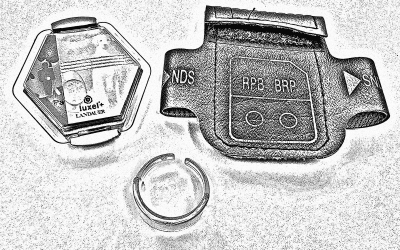
Personnel Dosimetry Strategies for a High-Performing Radiation Protection Program
In the radiation protection (RP) field, we focus intensely on the idea of keeping all radiological risks and doses as low as reasonably achievable (ALARA). This preventative principle should underscore the basis of every RP decision you make. A well-designed RP...
Questions about Radiation?
The Institute makes its scientist knowledge available to all Canadians and offers a free-of-charge Radiation Safety Information Service. The service provides answers to the questions that workers, employers, unions, government organizations and public may have about radiation safety. The Institute responds to hundreds of enquiries on an annual basis.
Toll Free: 1-800-263-5803
Email: info@radiationsafety.ca